Vol. 8 No. 2 (2025): Regular Issue
The articles published in Teknomekanik Volume 8, Issue 2 (2025) showcase recent advances in mechanical engineering, materials engineering, manufacturing processes, renewable energy systems, control engineering, and interdisciplinary engineering applications. This issue brings together 7 research articles authored by 41 researchers from institutions across 9 countries, including Brazil, the Czech Republic, Indonesia, Japan, Nigeria, the Philippines, Taiwan, Türkiye, and Vietnam.
The contributing institutions include Federal University of Rio Grande do Norte (Brazil); Czech Technical University in Prague (the Czech Republic); Institut Teknologi Bandung, Parahyangan Catholic University, Telkom University, Universitas Andalas, Universitas Diponegoro, Universitas Negeri Malang, Universitas Negeri Padang, and Universitas Pendidikan Indonesia (Indonesia); Gunma University (Japan); Bowen University, Landmark University, Osun State University, and University of Ibadan (Nigeria); University of Science and Technology of Southern Philippines (the Philippines); National Cheng Kung University (Taiwan); Kilis 7 Aralik University and Osmaniye Korkut Ata University (Türkiye); and Hanoi University of Industry (Vietnam). These contributions demonstrate the journal’s commitment to fostering international collaboration and strengthening global engagement in engineering research.
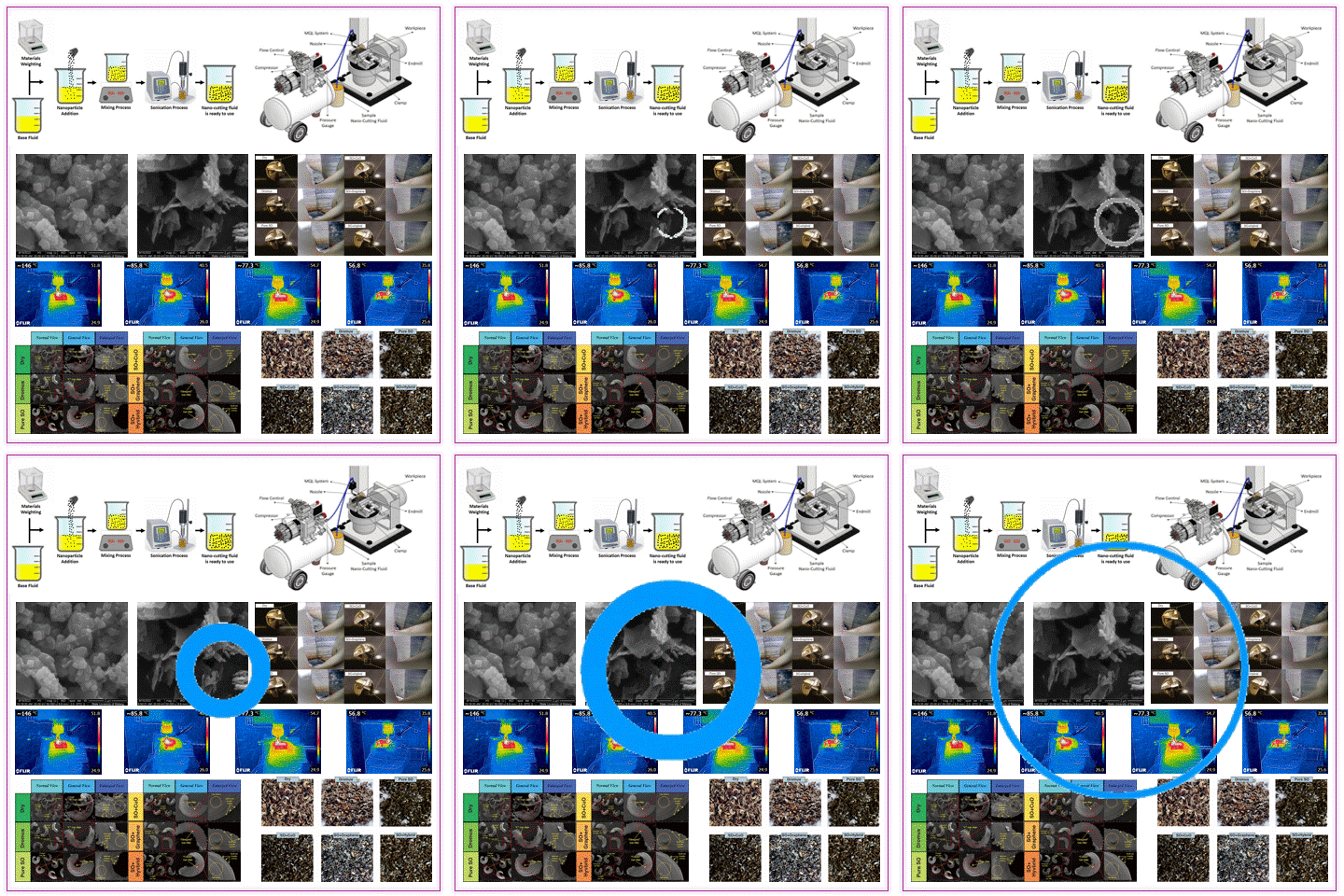
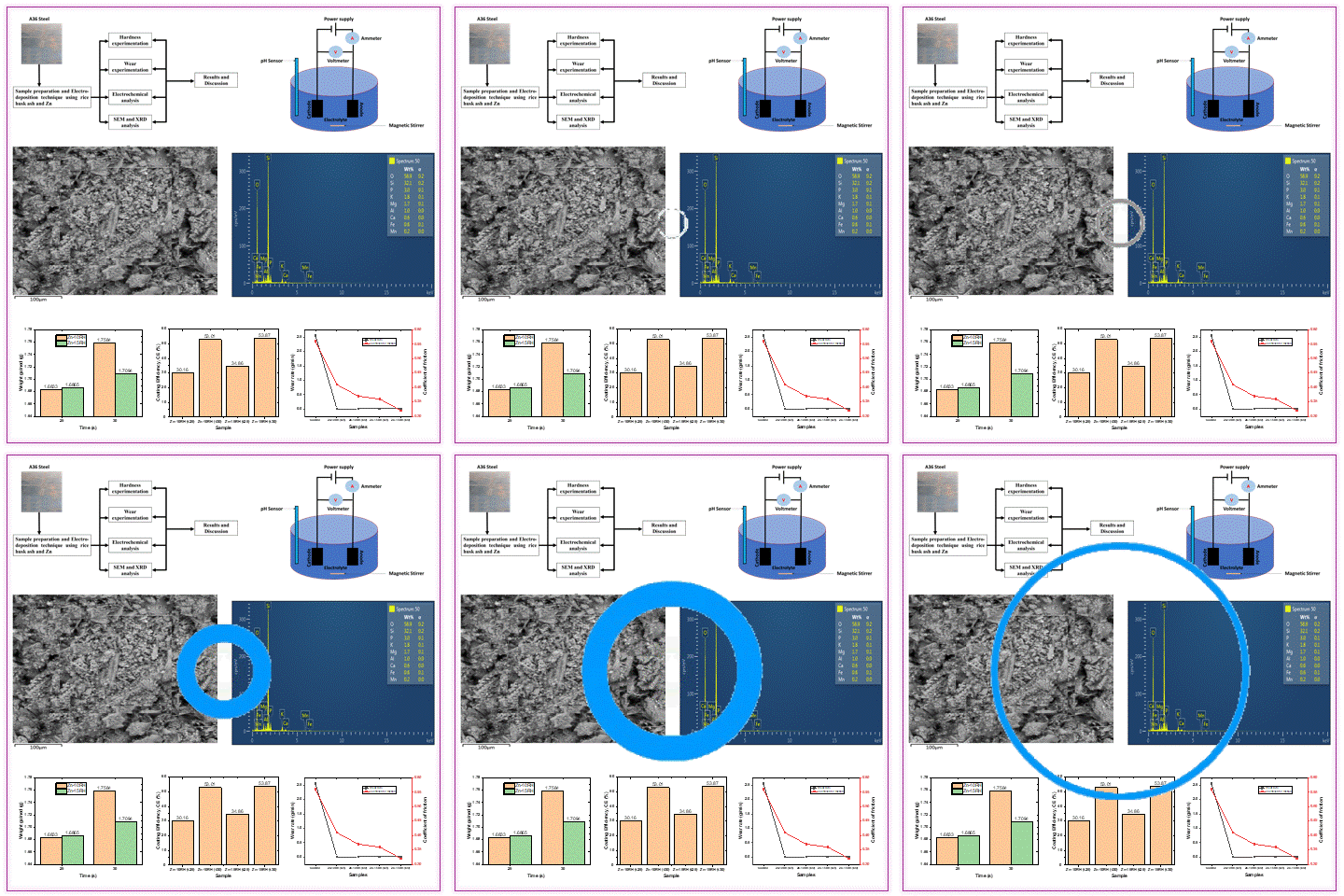
The published papers address a broad range of contemporary engineering challenges, including the application of CuO/graphene hybrid nanoparticles in soybean oil-based cutting fluids for sustainable CNC machining processes, the corrosion resistance, hardness, and wear performance of rice husk–zinc composite coatings deposited on steel substrates, methodological advancements in multi-criteria decision-making through the development of the rank-sensitive SIWEC-R approach, computational fluid dynamics (CFD)-based performance analysis of Savonius, Darrieus, and hybrid vertical-axis wind turbine configurations, decentralized consensus and control strategies for multi-drone mission monitoring, mechanical behavior of alkali-treated areca nut husk fiber-reinforced polyester composites modified with Uncaria gambir extract, and bibliometric trends in anti-ultraviolet (UV) films and composite materials. The issue highlights the growing integration of advanced materials engineering, computational simulations, intelligent control systems, optimization methods, and sustainability-oriented technologies to address emerging industrial and technological challenges.
In line with the journal’s focus and scope, this issue contributes to the advancement of knowledge in mechanical systems, materials and manufacturing technologies, renewable energy engineering, computational and simulation-based engineering, automation and control systems, composite materials, and interdisciplinary engineering innovation. The findings presented in these studies provide valuable scientific insights and practical solutions for researchers, educators, industry practitioners, and policymakers working toward sustainable technological development and industrial advancement.