
Grid convergence analysis of an H-Darrieus wind turbine for multiple blade configurations
DOI:
https://doi.org/10.24036/teknomekanik.v9i1.45272Keywords:
CFD, Darrius wind turbine, grid convergence index, vorticityAbstract
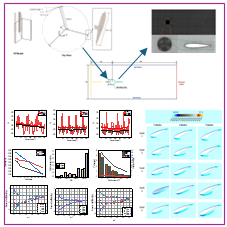
Mesh size and number significantly affected the accuracy of CFD simulations in wind turbine analysis. However, most studies focused solely on turbine performance, such as the blade torque or power coefficients. Therefore, this study adopted a broader perspective by analyzing the influence of mesh resolution on both aerodynamic performance and key fluid-dynamic parameters, including vorticity and pressure coefficients, for an H-type Darrieus vertical-axis wind turbine. Two-dimensional CFD simulations were performed using ANSYS Fluent with the k–ω SST turbulence model. Five mesh levels were evaluated across different blade configurations, and the Grid Convergence Index (GCI) was used to quantify discretization errors. The results indicate that increasing mesh resolution yields more stable torque predictions and improved resolution of near-wall flow features, with consistent grid-convergence behaviour observed across all blade configurations. GCI analysis shows that discretization errors consistently decrease as the mesh becomes finer. It also shows that a grid size of about 1.6 x 10⁵ cells is sufficient to keep errors below 5%. These findings show that including flow-field details in mesh sensitivity analysis gives a better way to check the accuracy of CFD simulations for Darrieus wind turbines.
References
F. Z. Wang, I. L. Animasaun, T. Muhammad, and S. S. Okoya, “Recent Advancements in Fluid Dynamics: Drag Reduction, Lift Generation, Computational Fluid Dynamics, Turbulence Modelling, and Multiphase Flow,” Arabian Journal for Science and Engineering, vol. 49, no. 8, pp. 10237–10249, 2024, https://doi.org/10.1007/s13369-024-08945-3
M. Muktiarni, N. I. Rahayu, A. Nurhayati, A. D. Bachari, and A. Ismail, “Concept of Computational Fluid Dynamics Design and Analysis Tool for Food Industry: A Bibliometric,” CFD Letters, vol. 16, no. 2, pp. 1–23, 2024, https://doi.org/10.37934/cfdl.16.2.123
A. W. Date, “Introduction to computational fluid dynamics,” Introduction to Computational Fluid Dynamics, vol. 9780521853, no. 2, pp. 1–377, 2005, https://doi.org/10.1017/CBO9780511808975
T. M. Oyinloye and W. B. Yoon, “Application of computational fluid dynamics (Cfd) simulation for the effective design of food 3d printing (a review),” Processes, vol. 9, no. 11, 2021, https://doi.org/10.3390/pr9111867
Hong Yee Kek et al., “A CFD assessment on ventilation strategies in mitigating healthcare-associated infection in single patient ward,” Progress in Energy and Environment, vol. 24, no. 1, pp. 35–45, 2023, https://doi.org/10.37934/progee.24.1.3545
M. Giovannini, F. Rubechini, M. Marconcini, A. Arnone, and F. Bertini, “Reducing secondary flow losses in low-pressure turbines: The ‘snaked’ blade,” International Journal of Turbomachinery, Propulsion and Power, vol. 4, no. 3, 2019, https://doi.org/10.3390/ijtpp4030028
J. Coull, C. Clark, and R. Vazquez, “The sensitivity of turbine cascade endwall loss to inlet boundary layer thickness,” Journal of the Global Power and Propulsion Society, vol. 3, pp. 540–554, 2019, https://doi.org/10.22261/JGPPS.OEYMDE
A. Zaryankin, A. Rogalev, V. Kindra, V. Khudyakova, and N. Bychkov, “Reduction methods of secondary flow losses in stator blades: Numerical and experimantal study,” European Conference on Turbomachinery Fluid Dynamics and Thermodynamics, ETC, no. January, 2017, https://doi.org/10.29008/etc2017-158
W. Zhang, J. Calderon-Sanchez, D. Duque, and A. Souto-Iglesias, “Computational Fluid Dynamics (CFD) applications in Floating Offshore Wind Turbine (FOWT) dynamics: A review,” Applied Ocean Research, vol. 150, no. May, p. 104075, 2024, https://doi.org/10.1016/j.apor.2024.104075
Y. Li, S. Yang, F. Feng, and K. Tagawa, “A review on numerical simulation based on CFD technology of aerodynamic characteristics of straight-bladed vertical axis wind turbines,” Energy Reports, vol. 9, pp. 4360–4379, 2023, https://doi.org/10.1016/j.egyr.2023.03.082
M. A. Singh, A. Biswas, and R. D. Misra, “Investigation of self-starting and high rotor solidity on the performance of a three S1210 blade H-type Darrieus rotor,” Renewable Energy, vol. 76, pp. 381–387, 2015, https://doi.org/10.1016/j.renene.2014.11.027
D. Han, Y. G. Heo, N. J. Choi, S. H. Nam, K. H. Choi, and K. C. Kim, “Design, fabrication, and performance test of a 100-W helical-blade vertical-axis wind turbine at low tip-speed ratio,” Energies, vol. 11, no. 6, pp. 1–17, 2018, https://doi.org/10.3390/en11061517
Q. Cheng, X. Liu, H. S. Ji, K. C. Kim, and B. Yang, “Aerodynamic analysis of a helical Vertical axis wind turbine,” Energies, vol. 10, no. 4, 2017, https://doi.org/10.3390/en10040575
L. X. Zhang, Y. B. Liang, X. H. Liu, Q. F. Jiao, and J. Guo, “Aerodynamic performance prediction of straight-bladed vertical axis wind turbine based on CFD,” Advances in Mechanical Engineering, vol. 2013, 2013, https://doi.org/10.1155/2013/905379
J. Guo, T. Qu, and L. Lei, “Effect of pitch parameters on aerodynamic forces of a straight-bladed vertical axis wind turbine with inclined pitch axes,” Applied Sciences (Switzerland), vol. 11, no. 3, pp. 1–12, 2021, https://doi.org/10.3390/app11031033
Z. Zhao et al., “Variable pitch approach for performance improving of straight-bladed VAWT at rated tip speed ratio,” Applied Sciences (Switzerland), vol. 8, no. 6, 2018, https://doi.org/10.3390/app8060957
M. R. Tirandaz and A. Rezaeiha, “Effect of airfoil shape on power performance of vertical axis wind turbines in dynamic stall: Symmetric Airfoils,” Renewable Energy, vol. 173, pp. 422–441, 2021, https://doi.org/10.1016/j.renene.2021.03.142
Y. Jiang, A. Murray, L. di Mare, and P. Ireland, “Mesh sensitivity of RANS simulations on film cooling flow,” International Journal of Heat and Mass Transfer, vol. 182, p. 121825, 2022, https://doi.org/10.1016/j.ijheatmasstransfer.2021.121825
A. Rezaeiha, H. Montazeri, and B. Blocken, “Towards accurate CFD simulations of vertical axis wind turbines at different tip speed ratios and solidities: Guidelines for azimuthal increment, domain size and convergence,” Energy Conversion and Management, vol. 156, no. October 2017, pp. 301–316, 2018, https://doi.org/10.1016/j.enconman.2017.11.026
A. Rezaeiha, I. Kalkman, and B. Blocken, “CFD simulation of a vertical axis wind turbine operating at a moderate tip speed ratio: Guidelines for minimum domain size and azimuthal increment,” Renewable Energy, vol. 107, pp. 373–385, 2017, https://doi.org/10.1016/j.renene.2017.02.006
F. Balduzzi, A. Bianchini, R. Maleci, G. Ferrara, and L. Ferrari, “Critical issues in the CFD simulation of Darrieus wind turbines,” Renewable Energy, vol. 85, pp. 419–435, 2016, https://doi.org/10.1016/j.renene.2015.06.048
B. Shahizare, N. N. Bin Nik Ghazali, W. T. Chong, S. S. Tabatabaeikia, and N. Izadyar, “Investigation of the optimal omni-direction-guide-vane design for vertical axiswind turbines based on unsteady flow CFD simulation,” Energies, vol. 9, no. 3, 2016, https://doi.org/10.3390/en9030146
D. C. Wilcox, Turbulence Modelling for CFD 3rd Edition. 1993.
J. H. Liu, J. C. Chen, and N. T. Corbita, “Analysis and comparison of turbulence models on wind turbine performance using SCADA data and machine learning technique,” Cogent Engineering, vol. 10, no. 1, 2023, https://doi.org/10.1080/23311916.2023.2167345
A. Meana-Fernández, J. M. Fernández Oro, K. M. Argüelles Díaz, and S. Velarde-Suárez, “Turbulence-model comparison for aerodynamic-performance prediction of a typical vertical-axis wind-turbine airfoil,” Energies, vol. 12, no. 3, pp. 1–16, 2019, https://doi.org/10.3390/en12030488
M. R. Rashed, O. E. Abdellatif, M. F. Abd Rabbo, E. E. Khalil, and I. Shahin, “Turbulence Modeling Comparative Analysis for Vertical Axis Wind Turbines,” Engineering Research Journal - Faculty of Engineering (Shoubra), vol. 44, no. 1, pp. 71–79, 2020, https://doi.org/10.21608/erjsh.2020.290027
P. I. Muiruri, O. S. Motsamai, and R. Ndeda, “A comparative study of RANS-based turbulence models for an upscale wind turbine blade,” SN Applied Sciences, vol. 1, no. 3, pp. 1–15, 2019, https://doi.org/10.1007/s42452-019-0254-5
H. Li, L. Rong, and G. Zhang, “Reliability of turbulence models and mesh types for CFD simulations of a mechanically ventilated pig house containing animals,” Biosystems Engineering, vol. 161, pp. 37–52, 2017, https://doi.org/10.1016/j.biosystemseng.2017.06.012
P. J. Roache and P. J. Roache, Fundamentals of verification and validation. 2009.
J. G. Acosta-López, A. P. Blasetti, S. Lopez-Zamora, and H. de Lasa, “CFD Modeling of an H-Type Darrieus VAWT under High Winds: The Vorticity Index and the Imminent Vortex Separation Condition,” Processes, vol. 11, no. 2, 2023, https://doi.org/10.3390/pr11020644
P. M. Kumar, M. R. Surya, K. Sivalingam, T. C. Lim, S. Ramakrishna, and H. Wei, “Computational optimization of adaptive hybrid Darrieus turbine: Part 1,” Fluids, vol. 4, no. 2, 2019, https://doi.org/10.3390/fluids4020090
S. M. E. Saryazdi and M. Boroushaki, “2D numerical simulation and sensitive analysis of H-darrieus wind turbine,” International Journal of Renewable Energy Development, vol. 7, no. 1, pp. 23–34, 2018, https://doi.org/10.14710/ijred.7.1.23-24
P. Zamre and T. Lutz, “Computational-fluid-dynamics analysis of a Darrieus vertical-axis wind turbine installation on the rooftop of buildings under turbulent-inflow conditions,” Wind Energy Science, vol. 7, no. 4, pp. 1661–1677, 2022, https://doi.org/10.5194/wes-7-1661-2022
P. Queutey, G. Deng, J. Wackers, E. Guilmineau, A. Leroyer, and M. Visonneau, “Sliding grids and adaptive grid refinement for RANS simulation of ship-propeller interaction,” Ship Technology Research, vol. 59, no. 2, pp. 44–57, 2012, https://doi.org/10.1179/str.2012.59.2.004
P. J. Roache, “Roache_1994.pdf,” Journal of Fluid Engineering, vol. 116. pp. 405–413, 1994.
D. P. Sari et al., “Performance of undershot waterwheel in pico scale with difference in the blades number,” Journal of the Brazilian Society of Mechanical Sciences and Engineering, vol. 44, no. 3, pp. 1–10, 2022, https://doi.org/10.1007/s40430-022-03430-0
D. Adanta, S. B. S. Nasution, Budiarso, Warjito, A. I. Siswantara, and H. Trahasdani, “Open flume turbine simulation method using six-degrees of freedom feature,” AIP Conference Proceedings, vol. 2227, no. May, 2020, https://doi.org/10.1063/5.0004389
A. Meana-Fernández, J. M. Fernández Oro, K. M. Argüelles Díaz, M. Galdo-Vega, and S. Velarde-Suárez, “Application of Richardson extrapolation method to the CFD simulation of vertical-axis wind turbines and analysis of the flow field,” Engineering Applications of Computational Fluid Mechanics, vol. 13, no. 1, pp. 359–376, 2019, https://doi.org/10.1080/19942060.2019.1596160
S. Shubham, U. Kingdom, and N. Wright, “VAWT aerodynamics and aeroacoustics at various tip speed ratios using Lattice Boltzmann Method,” Authorea. pp. 1–20, 2023. https://doi.org/10.22541/au.174315443.31960751/v1
G. Baca, G. B. Dos Santos, and L. O. Salviano, “Design and Optimization of a Low TSR HDarrieus Turbine Based on Geometry Parameterization Through Joukowsky Transformation,” Advances in Transdisciplinary Engineering, vol. 54, pp. 447–459, 2024, https://doi.org/10.3233/ATDE240345
Z. Zhao, D. Wang, T. Wang, W. Shen, H. Liu, and M. Chen, “A review: Approaches for aerodynamic performance improvement of lift-type vertical axis wind turbine,” Sustainable Energy Technologies and Assessments, vol. 49, no. October 2021, p. 101789, 2022, https://doi.org/10.1016/j.seta.2021.101789
A. Bianchini, G. Ferrara, and L. Ferrari, “Design guidelines for H-Darrieus wind turbines: Optimization of the annual energy yield,” Energy Conversion and Management, vol. 89, pp. 690–707, 2015, https://doi.org/10.1016/j.enconman.2014.10.038
S. Ali and C. M. Jang, “Effects of tip speed ratios on the blade forces of a small h-darrieus wind turbine,” Energies, vol. 14, no. 13, pp. 1–18, 2021, https://doi.org/10.3390/en14134025
E. Leelakrishnan, M. Sunil Kumar, D. Selvaraj, N. Sundara Vignesh, and T. S. Abhesheka Raja, “Numerical evaluation of optimum tip speed ratio for darrieus type vertical axis wind turbine,” Materials Today: Proceedings, vol. 33, Part 7, pp. 4719–4722, 2020, https://doi.org/10.1016/j.matpr.2020.08.352
C. Lothodé, J. Poncin, D. Lemosse, E. Pagnacco, and E. S. Cursi, “Efficient dynamic fluid-structure computation for blade-mast interaction of a tidal turbine,” 7th International Conference on Ocean Energy 2018, no. June, pp. 1–7, 2018. http://ocean-energy-systems.org/publications/icoe/icoe-2018/document/efficient-dynamic-fluid-structure-computation-for-blade-mast-interaction-of-a-tidal-turbine/
A. Khedr and F. Castellani, “Critical issues in the moving reference frame CFD simulation of small horizontal axis wind turbines,” Energy Conversion and Management: X, vol. 22, no. February, p. 100551, 2024, https://doi.org/10.1016/j.ecmx.2024.100551
F. R. Menter, “Improved two-equation k-omega turbulence models for aerodynamic flows,” 1992. https://ntrs.nasa.gov/citations/19930013620
F. R. Menter, “Review of the shear-stress transport turbulence model experience from an industrial perspective,” International journal of computational fluid dynamics, vol. 23, no. 4, pp. 305–316, 2009. https://doi.org/10.1080/10618560902773387
A. Seeni, P. Rajendran, and H. Mamat, “A CFD mesh independent solution technique for low reynolds number propeller,” CFD Letters, vol. 11, no. 10, pp. 15–30, 2019. https://www.akademiabaru.com/submit/index.php/cfdl/article/view/3187
Warjito, Budiarso, K. Celine, and S. B. Sakti Nasution, “Computational Method for Designing a Nozzle Shape to Improve the Performance of Pico-Hydro Crossflow Turbines,” International Journal of Technology, vol. 12, no. 1, pp. 139–148, 2021, https://doi.org/10.14716/ijtech.v12i1.4225
M. N. Uddin, M. Atkinson, and F. Opoku, “CFD Investigation of a Hybrid Wells Turbine with Passive Flow Control,” Energies, vol. 16, no. 9, 2023, https://doi.org/10.3390/en16093851
K. Song, H. Huan, L. Wei, and C. Liu, “Aerodynamic Performance and Coupling Gain Effect of Archimedes Spiral Wind Turbine Array,” Journal of Marine Science and Engineering, vol. 12, no. 7, 2024, https://doi.org/10.3390/jmse12071062
P. K. Talukdar, A. Sardar, V. Kulkarni, and U. K. Saha, “Parametric analysis of model Savonius hydrokinetic turbines through experimental and computational investigations,” Energy Conversion and Management, vol. 158, no. December 2017, pp. 36–49, 2018, https://doi.org/10.1016/j.enconman.2017.12.011
S. V Ramana Murthy and S. Kishore Kumar, “Effect of different turbulence models on the numerical analysis of axial flow turbine stage of a typical turbofan engine,” in Gas Turbine India Conference, American Society of Mechanical Engineers, 2013, p. V001T02A004. https://doi.org/10.1115/GTINDIA2013-3555
M. Moshfeghi, Y. J. Song, and Y. H. Xie, “Effects of near-wall grid spacing on SST-K-ω model using NREL Phase VI horizontal axis wind turbine,” Journal of Wind Engineering and Industrial Aerodynamics, vol. 107, pp. 94–105, 2012. https://doi.org/10.1016/j.jweia.2012.03.032
S. Younoussi and A. Ettaouil, “Calibration method of the k-ω SST turbulence model for wind turbine performance prediction near stall condition,” Heliyon, vol. 10, no. 1, p. e24048, 2024, https://doi.org/10.1016/j.heliyon.2024.e24048
Downloads
Published
Issue
Section
License
Copyright (c) 2026 Sanjaya Baroar Sakti Nasution, Dian Morfi Nasution, Elang Pramudya Wijaya, Oki Suprada Ompusunggu (Author)

This work is licensed under a Creative Commons Attribution 4.0 International License.
How to Cite
Share